KEMRI FACES building
Showing posts with label kisumu. Show all posts

Tuesday, May 1, 2007

travel to Kisumu / Kenya

[last updated on 2007 Aug 18 by sophy]

Summary:
•You want to check for flights that go to Nairobi (NBO). British Air offers direct flights from SFO to London, then London to Nairobi. KLM offers flights from SFO to Amsterdam, then Amsterdam to Nairobi. There are also now flights from Paris.

•
•From Nairobi you will either purchase a ticket there for a flight to Kisumu (40 mins) or take a taxi into the city and take a bus to Kisumu (8+ hours).

•
•Contact Kimberly Bale <BaleK@globalhealth.ucsf.edu> at least a week before you leave with your flight information and plan for travel from Nairobi to Kisumu. Veronica Achieng will pick you up from the airport or bus station and arrange transportation to the FACES flat or the Pabari Cottages, depending on where you are staying.

•
*** More suggestions, updated 18 Aug 2007:

-prices for flights fluctuate dep on season, but expect to pay $1600-1900 for SFO to Europe to Nairobi and back. On off-season (Feb-April), you can find tickets as low as $1200. This is going to be the biggest expense on your trip. Purchase tickets to Nairobi, not directly to Kisumu. i generally call STA Travel, check in with them about pricing trends, and also check out British Air and KLM websites.

Suggestions: try the following online resources for your flight to Nairobi...

http://www.kayak.com - as a clearinghouse for most major online sites (thanks, Kate!)

http://atmtrvl.com/ - a local SF travel agent that Craig Cohen uses, call 415.627.0717

http://www.statravel.com/ - student travel agent, may have special discounts, best to call them for specials (800) 781.4040


Specific airlines that fly to
Nairobi:

http://www.britishairways.com

http://www.klm.com

http://www.virgin-atlantic.com


-bag limits are strict from London to Nairobi (one carry-on only, 2 bags at 25kg max each baggage limit) and from Nairobi to Kisumu (if you fly, 20kg max weight for checked bags *total.* they don't weigh your carry on unless it's huge. some airlines will allow you to fudge to 25kg if other people on the plane don't have much stuff). so if you are hauling a lot of stuff, i.e. more than 25kg, you should think about taking a bus instead.

-flights from Nairobi to Kisumu: most people have a half-day or overnight stay in Nairobi and have time to purchase their tickets when they get there. It's really easy to purchase there, and you almost always get a seat. If you prefer to have them in advance (pricing is similar online), you can try purchasing them online with Fly540 or Kenya Air. Their websites seem to work only intermittently, so i tend to purchase the tickets when i'm in Kenya. The flights should cost $40-50 each way on Fly 540. Kenya Air is much more expensive, at about $70-80 each way. There's another small company that also runs a plane shuttle- i forget what it's called, but the prices are comparable to Fly540. For all airlines, there are generally one set of flights in the morning, around 8 am, and one set of flights in the evening, around 6-7 pm.

http://www.fly540.com/

http://www.kenya-airways.com/

-if you need to stay overnight in Nairobi, some recommendations on safe places to stay (take a taxi and don't walk around at night, esp by yourself!):

budget ($5/night) - YMCA hostel: Y.M.C.A. Shauri Moyo Hostel, Ambira Road, PO Box 17073, Nairobi, Kenya, Phone : +254 (2) - 558383, Fax : +254 (2) - 728822

moderate ($40/night): Comfort Hotel, in the city centre: http://www.kenyacomfort.com/

luxury ($100/night): Fairview, out of city centre but gorgeous: http://www.fairviewkenya.com/

-bus from Nairobi to Kisumu: no baggage weight limits, so if you have a lot of stuff, you're up for an 8-hour adventure, don't mind being the only non-Kenyan on the bus, and want to save a bunch of money, you can take the $7 bus from Nairobi to Kisumu. There are a few bus operators, but Easy Coach is the safest and most comfortable (but the slowest). Matatus are much faster and cheaper, but they are more dangerous, and i think the university is discouraging people to take the matatus... personally, i also think that it's even less safe when you are carrying a lot of luggage as thefts are more common on matatus.

At the airport, get an official taxi (with an official taxi number on the window and door) and ask them to take you to the Easy Coach Nairobi station. It's different from the main bus station, which can be hellish chaos. Protect your luggage! Purchase your ticket there and wait for the next bus. Make sure you pee and get food before you board (there will be one or two stops only on the 8-hour ride). The bus may be hot and usually crowded, but since you will be at elevation, it won't be too sticky. Keep your bags on your lap at all times or if you stay awake, keep them overhead and watch them (don't keep them on the floor; they run the risk of getting knifed). Bags in the trunk area of the bus are generally safe because they are monitored by the bus staff, but nothing's ever guaranteed while traveling, regardless of plane or bus. Time on the bus depends on road conditions: 6 to 8+ hours. Try to give Veronica Achieng a call along the way so she knows when you're arriving: pay someone to use their cell phone or call at a rest stop "pay phone" - i.e. pay someone with a special landline to make a call.

Make sure Kimberly Bale knows how you're arriving to Kisumu so she can tell Veronica Achieng where to pick you up! BaleK@globalhealth.ucsf.edu


Update 11/27/07 by Kate

-Airlines that fly from Nairobi to Kisumu are Kenyan Airways (you can buy online in advance, but is more expensive, ~$105 one way). I booked in advance so I could minimize my layover in Nairobi and it worked perfectly - made the 8am flight after getting in on the 6am ft from London. Fly540 is cheaper & has a website, but I haven't tried it and am not sure how well it works. East African and JetLink are the other common options. Both are cheaper (about half the price of Kenya Airways), but I'm not sure about advanced online booking. You can try contacting a local travel agency (Let's Go Travel in Nairobi has been highly recommended) and trying to arrange your ticket through them before you get to Kenya. If you're going to arrange your transfer after arriving in Nairobi, be aware that last month not all flights were going daily and it was a little harder to just walk up and be sure there'd be a seat that day. May have changed by now, though.

- Also, for in-country it appears that if you have >20kg of stuff it's ok as long as it's in 2 bags, neither of which is more than 20kg.

rotation pocket guide

[last updated 2007 Aug 7 by sophy]

Download the complete rotation pocket guide here:

www.resister.info/FACES.rotation.pocket.guide.pdf


It includes the rotation schedule, weekly clinic schedules, rotation goals, FACES formulary, WHO staging, contact information, etc.

map


Download a printable PDF map of Kisumu and Western Kenya here:

www.resister.info/kenya.map.pdf

travel: within Kisumu

last update 1 May 2007, sophy

on foot

-what it is: walking along the hot dusty roads; great for exercise and seeing the town!
-risks: watch out for crossing roads and vehicles that get too close to you (stick to the foot paths)
-cost: free!


boda bodas (bicycle taxis)
-what it is: Kenyan men (i've never seen a woman boda boda driver) riding big bikes outiftted with nice passenger cushions, handlebars and foot rests in the back; good for seeing the town a little faster and supporting microenterprise by young previously unemployed men.
-risks: no helmet, fast speeds downhill with questionable brakes, inconsistent bicycling skills- but safer than riding a bike without a helmet in China!
-how to find one: they are all over town, scouring the roads for riders; just hail one down on a decent sized road if one doesn't come to you quickly
-cost: 30-50 Ksh (30 in town, 50 to go a bit outside of town in Milimani)


tuk tuks (3-wheeled vehicles)
-what it is: a covered, motorized, diesel-powered vehicle with headlights and trunk space that can carry 3 passengers (though most try to fit more); good for relatively cheap rides home after shopping at the market or in town
-risks: no seat belts, small size means that a collision would be painful
-how to find one: mostly on the main roads in Kisumu, such as Oginga Odinga Road and Jomo Kenyatta Ave; you can easily find them next to shopping centers in town; you can also get the phone number of one if you ask a driver who now knows where you live (if he has a cell phone)
-cost: 50 Ksh in town, 100 Ksh beyong town (such as in Milimani)


matatus
-what it is: mini-vans with decent road clearance which provide most of the "public transportation" in Kenya, even though they are privately owned. Can carry about 15-20 people, though by Kenyan law everyone should have a seatbelt on. Used to cost 3 shillings, hence the name "tatu," which also means "three."
-risks: most people don't wear seatbelts, and they are frequently overstuffed with people hanging out the doors. There have been isolated cases of people getting thrown out of matatus that suddenly stop and having sever injuries (some fatal), which is why the seatbelt law happened in 2004).
-where to find one: matatu stand in town; certain main intersections on Oginga Odinga Road and Jomo Kenyatta Ave, such as the Mega Mall and United Mall
-cost: 10 Ksh in town; 20-50 Ksh beyond town, depending on where you're going


taxis
-what it is: like everywhere else, dudes (i haven't seen a woman taxi driver here yet) driving sedans. In Nairobi, stick to the official taxis with the circle logo on the car; there is no such designation that I know of in Kisumu.
-risks: getting ripped off by an unauthorized taxi
-where to find one: most folks in Kisumu have cell phone numbers of reliable taxis they call directly, such as: 0727-172-825 or Easy Cabs (director: George Kimani) at 0725-434485.
-cost: 100-200 Ksh in town; 200-300 Ksh beyond town, such as in outer Milimani


buses
-the safest bus companies that serve Kisumu include Easy Coach and Eldoret Express, which are fairly reliable but very slow
-these are mainly to get out of town, so refer to the other travel sections for further details

food: where to buy, eat out

last updated 1 May 2007, sophy

Purchasing food to cook on your own:

-ladies along Jomo Kenyatta Ave between Oginga Odinga Road and United Mall: sukima wiki (kale/collards) 10Ksh a bag, tomatoes, cucumbers, dried beans of all kinds, fish in various states of preparedness.

-Nakumat Market in the Mega Mall plaza on Oginga Odinga Road: almost like Wal-Mart, and can be just as crowded; has most of the packaged goods you would ever want. It also has a fruit and veggie mart in a smaller room next to it which is pricier than the outdoor market but not bad. Also has lots of imported fruits and veggies that you can’t get in the outdoor market (i.e. Asian stir-fry veggies, nice oranges, kiwi fruits, etc.).

-Ukwala Market on Oginga Odinga Road: has more Asian food items (mostly South Asian but has a decent selection of Chinese sauces).

-Tusky’s in United Mall on Jomo Kenyatta Ave: like Target and Safeway rolled into one. A very modern, clean, and relatively pricey (though cheap for US standards) supermarket.

-La Patisserie in the Mega Mall plaza on Oginga Odinga Road has great whole grain and other fresh breads.

-Kenshop bakery on on Oginga Odinga Road has a decent cookie and baked sweets selection.

Lunch at FACES Kisumu:

Most of us take a tea break around 11 am: the CIS break room has hot milk with Kenyan tea bags, and the stand outside sells sodas (300 and 500 ml) for 16 and 25 Ksh as well as mandazi (Kenyan donuts, which are basically unflavored fried dough), bread and popcorn. There is no water sold at the stand, and the water cooler in the break room is frequently empty. Bring your own water or walk to the Tusky’s at the United Mall to buy bottled water.

Most people take lunch at 1 or 2 pm, on a rotating basis so that there are always people at the clinic. Waya is a local woman who sells plates of food for staff. Veggie dishes cost 30 Ksh and meat dishes are 50 Ksh and up. You get to choose from the following elements:

-starch: ugali (white corn meal), white rice, chapati

-veggies: sukima wiki (kale/collards, literally, “push the week,” as it is one of the cheapest foods to buy), cabbage

-legumes: green grams (lentils), red kidney beans (“big beans”)

-meat: whatever Waya has for the day; i’ve never eaten any of it so i can’t vouch for it.

Other lunch options include walking to the United Mall for the semi-fancy restaurants at the casino or inside (expect to pay 350 Ksh, or about $5 US). The hotelis along the road in back of the United Mall also have lots of food stands. Beware of limited food options. Most of our Kenyan colleagues will eat only chips (soggy fries) and soda for lunch.

Restaurants in town that we like:

-Mon Ami: bar with decent restaurant with pizzas, Kenyan food, and lots of veggie options, a favorite local hang-out spot, which is fairly safe at night with DJ’ed music of various quality. It’s in the Mega Mall on Oginga Odinga Road. Expect to pay about 350-400 Ksh for a meal.

-Somi Snacks: in the Mega Mall plaza on Oginga Odinga Road is a South Asian mid-priced cafĂ© style place specializing in vegetarian foods (!!) with excellent dhosas and juices. They also have pizzas. Expect to pay about 350-400 Ksh for a meal. Sophy’s favorite for veggie food options.

cell phones

[last updated 2007 Aug 9 by sophy]

It's definitely worthwhile and recommended to have a cell phone while doing your rotation at FACES. It's the primary way to stay in touch with folks, including getting consults / feedback from medical officers, especially in Suba. You will SMS (text-message) A LOT.

-Kombo at FACES Kisumu (Lumumba Health Centre) has basic cell phones that you can borrow for free from FACES for the time you're rotating there. You just pay for the phone cards to charge the phones to make calls. These cell phones are pay-as-you-go. Kenyans call it "topping off" your phone.

-If you have a tri- or quad-band GSM phone, then you can ask your cell phone provider ahead of time to unlock your SIM card (you might need a password to unlock it), then purchase a SIM card in Kenya (it's not expensive, around US$10-20) and then purchase a pay-as-you-go phone card to put money on your phone. This is a nicer option if you particularly like your phone and it has a good texting keyboard. Be aware however that nice phones are more prone to theft; cell phone thefts are one of the most common petty crimes in Kenya.

rotation schedule

[last updated 2007 Aug 9 by sophy]


Suggested Weekly Schedule

WEEK 1

Objectives:

· Understand the major responsibilities of each department

· Begin shadowing, seeing patients and mentoring Clinical Officers

Schedule:

Day 1 (plan to spend about 1-2 hours with each station in #3-9 below)

1. Orientation with Vero, Patie or MO/CO mentor: You should receive an orientation manual, a FACES formulary, a set of patient information forms, a list of drugs available at FACES, a copy of the National Guidelines.

2. Walk through clinic with receptionist

1. Vitals bench

2. Community Health Workers

3. Nurses’ bench

4. Laboratory

5. Pharmacy

6. Clinical exam rooms

7. Washrooms

8. Food places

3. Reception: Introduction to scheduling, types of patient appointments and relevant clinical forms

4. HIV Education session with Peer Educator/CHW

5. Triage nurse: WHO staging and initial triage, enrollment

6. Adherence Counseling: try to sit in on at least one of each; they happen in the mornings

7. Community Health Workers bench: Approach to triage, food by prescription

8. Nurses’ bench : Observe triage, follow-up, stable patient, & counseling visits

9. Sit in on patient visits with CO and MOs. Ask the CO-in-charge whom to sit with.

Days 2-5:

· Sit with clinical officers and begin to provide clinical mentorship. Focus on detailed history taking, rational physical examination, differential diagnosis, assessment and plan.

· Review the Kenyan guidelines for anti-retroviral therapy including first-line and second line therapies, indications for changing regimens, algorithms for lab monitoring

· Become comfortable with clinic logistics: how to order tests, prescription forms, FACES formulary, how to complete a clinic visit form, how to coordinate follow-up for urgent cases and labs/imaging

· Schedule your CME and Journal Club sessions with the CO in charge of CME scheduling.

Weeks 2-4 or 2-6

1. Continue clinical mentoring, physical exam teaching; also see patients independently if interested

2. Choose and prepare journal article

3. Develop CME (ask CME coordinator for topics that have been requested)

4. Write 1-2 sections for the Clincians’ Pocket Guide to Medicine (these can be the same as your CME topic)

5. Update rotation schedule, CME/Journal Club lists, and blog for fellow residents!

6. If you have a good case: choose and prepare case presentation or case report with a FACES clinician

Other Clinical Opportunities in Kisumu:

1. Prison visits with clinical officer third Thursday of every month

2. Attend VCT outreach session with youth teams from Tuungane

3. Visit FHOK Meshack clinc - outreach to commercial sex workers

clinic schedule: Kisumu

[last updated 2007 Aug 9 by sophy]

•Monday: 8:00 am – 5:00 pm Lumumba Clinic

•
•Tuesday: 7:30 – 9am Tuungane meeting, then clinic

•
•Wednesday: 8:00 am – 5:00 pm Lumumba Clinic

•
•Thursday: admin, CME and home visit day
7:30am – 8:30 am Clinical Meeting / Journal Club
9:00am - 10:30am Staff meeting
11:00am - 12:00pm Community Care Meeting
12:00pm - 2:30pm Home visits and hospital rounds
3.00pm – 4.30pm Continuous Medical Education

•Friday: 8:00am - 5:00pm Clinic hours with special emphasis for expectant mothers and children (but there are plenty of adults to see).

places to hang out

safari and weekend trips

[last update 2007 Aug 9 by sophy]

*Kakamega Forest: highly recommended!

My one safari in Kenya – purely for fun – was my trip to Kakamega Forest. It’s one of my favorite places in the world. It is the only rainforest in Kenya, and it’s barely protected by the government. The Kenyans have formed an NGO: KEEP- Kenya Environmental Education Project, to help do some of the preservation and education in the forest.

Kakamega Forest is very close to Kisumu – only a 45-60 minute matatu ride away. It’s in between Eldoret and Kisumu, so it was perfect for me to stay in the forest when returning from my trip to Eldoret. To get there from Eldoret, you can take a matatu to Kakamega town, then a matatu-truck to Shinyalu. That will cost 140 ksh to Kakamega, then 60 ksh to Shinyalu. From Kisumu, take a matatu to Khayega (these are likely to be the matatus going to Kakamega town, just ask them), which is about 140 ksh. Khayega is a small town on the highway before you reach Kakamega town from Kisumu. At Shinyalu, you can take a boda boda for 50 ksh or walk a hot dusty road about 7 km to the Forest Rest House bandas (basic bandas for about 200 ksh a night) or 9 km to Rondo House (absolutely gorgeous Christian retreat center: full board with 3 meals per day in a shared room, though it likely will not be shared because it won’t be full, is 4200 ksh for non-citizen Kenyan residents, i.e. people who work in Kenya but are not citizens, like me). At Khayega, which is further from the interior of the forest than Shinyalu, it’s best to take a boda boda for 100 ksh to Rondo or Forest Rest House. KEEP also has some bandas to stay in, but I am not sure of the pricing.

Once you’re in the forest, you can hire a forest guide for 300 ksh per person per hike/walk. Joe Mamlin goes to Kakamega all the time and always goes with a guide named Ben. I went with a guide from KEEP named Gabriel, who runs the KEEP Education Program in 100 local schools on a volunteer basis. His only income comes from leading these guided walks through the forest. I tipped him handsomely in part for that reason, in part because he led me on a great hike up to the bat cave and Rondo Point. At 2,000 meters, climbing the hill as fast as Gabriel definitely gave me a challenging work-out. It was well worth it: the view from Rondo Point is spectacular. You can see all of Kakamega Forest, as far as Kericho and Kisumu. The bat cave was also very cool. I got to see baby bats. There also something very peaceful (though initially scary) about being in a dark cave with small bats gently flying around you.

Rondo is a beautiful place, and well worth the extra expense. It’s peaceful, has its own self-contained beautiful walks through the forest. The food is amazing and fresh. They will accommodate special diets too. It was so peaceful that I didn’t even mind all the missionaries there. In some ways, we are doing similar work. It was definitely the kind of reflective getaway I needed.


Kisumu: massage on call!

Violet Lugonzo is a trained massage therapist based in Kisumu who can do house-calls or arrange a room at the Imperial Hotel for massage services. She’s a good practitioner (and I’m fairly picky). She does a full body massage (front and back, including face and feet; nothing weird, no "special" massages as far as i know) for 500 ksh on house-call, 1,000 ksh at Imperial Hotel (to cover the room fee).

-what: hour-long, full-body or customizable pressure-point and tissue massage

-price: 500 ksh on home-call or 1,000 ksh at Imperial Hotel

-when: any day of the week, daytime hours (for Violet’s travel safety), call at least one hour in advance to arrange

-provisions: provide your own baby oil or massage oil, own surface (bed or floor), towel or sheet. You can also ask Violet to bring massage oil for you, and then reimburse her when you pay her for the massage.

-contact: Violet by cell phone = 0734-724-644

faces of FACES

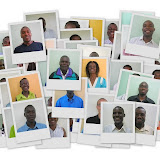
Check out a slideshow of the fabulous staff at FACES:

faces of FACES